



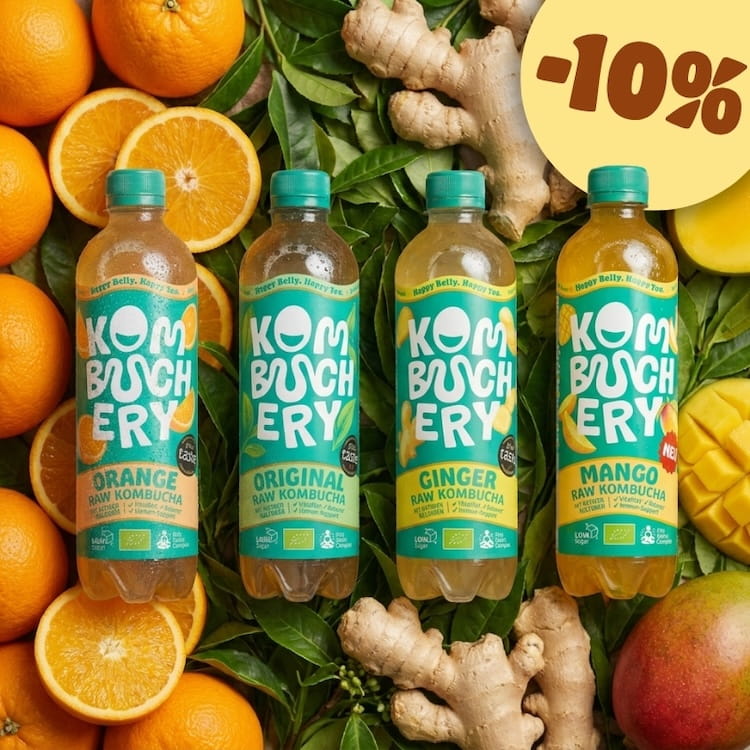
How to recognize good Kombucha?
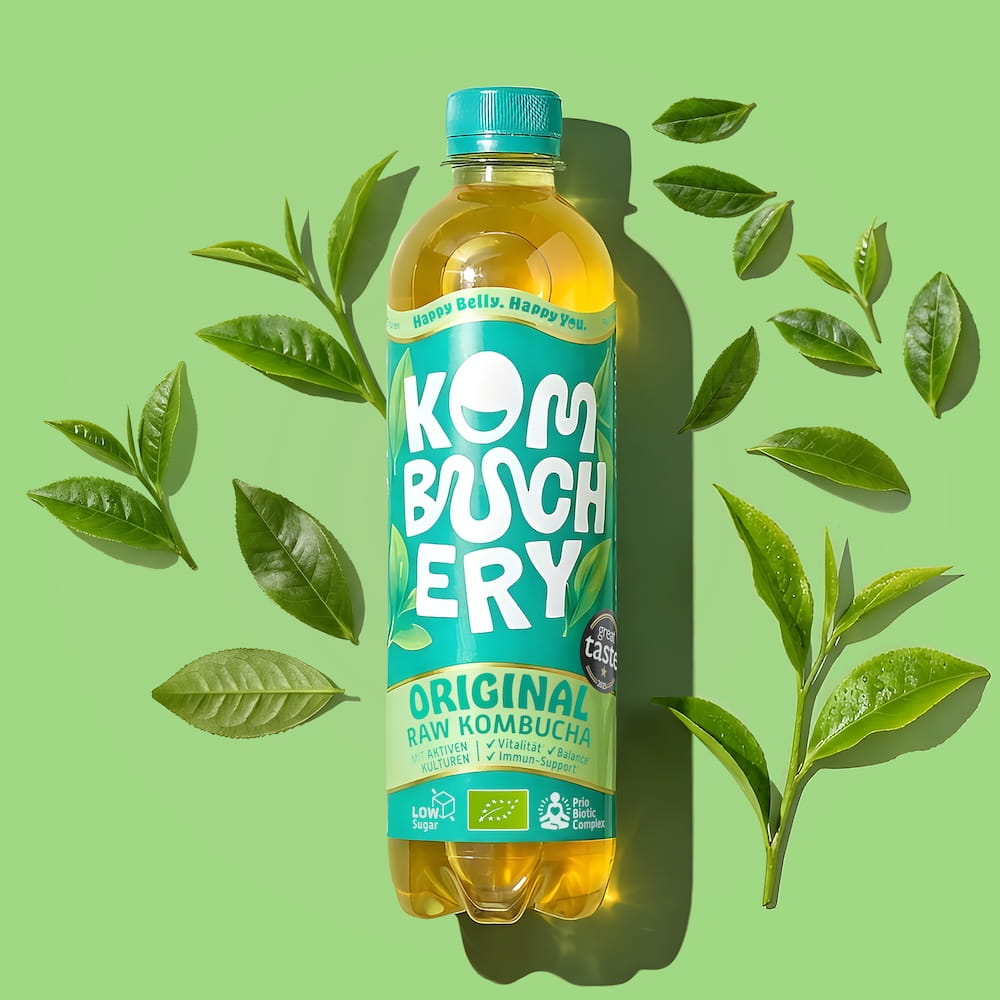
Kombucha can differ significantly depending on the ingredients, fermentation process, and further processing. If you want to compare different products, some information on the label and ingredient list can help you. We have put together five simple points to look out for. These will make it easier for you to choose the right purchase.
Checklist for real unpasteurized Kombucha
1. Unpasteurized
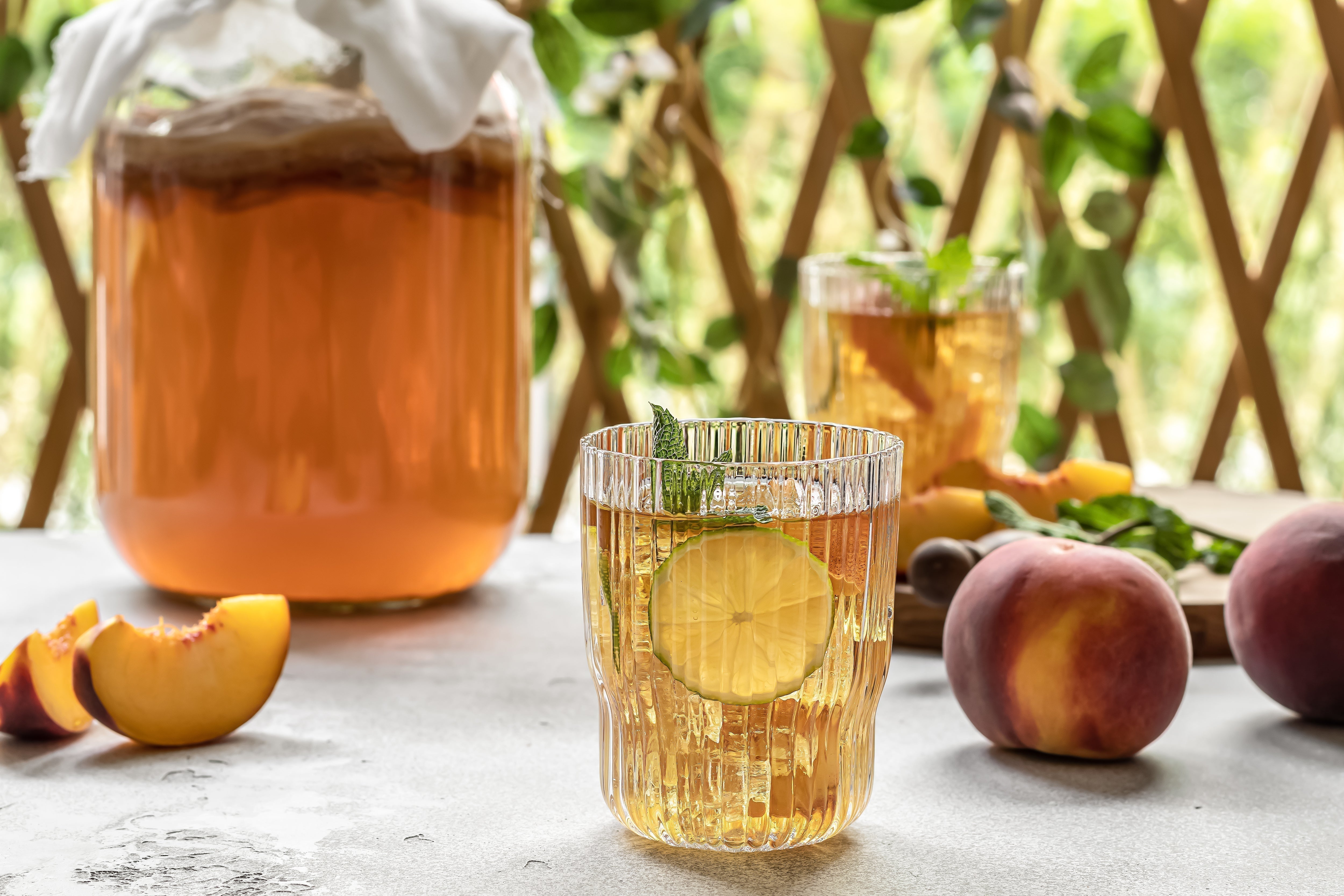
With raw Kombucha, some sediment or small mini tea fungi and yeasts often form at the bottom. In unfiltered Kombucha, visible cloudiness or deposits may occur. However, whether a product has been pasteurized and contains living cultures can be more reliably judged by the manufacturer's information than by its appearance alone. Simply shake the bottle gently and the deposits will disappear. If living cultures are important to you, you can look for terms like "raw" or "unpasteurized." Whether a Kombucha meets your quality expectations also depends on ingredients, taste, and processing.
2. Correct Ingredient Order
A look at the ingredient list and ingredient order can also help you compare different Kombuchas. Classic Kombucha is based on a few basic ingredients such as water, tea, sugar, and a Kombucha culture. Depending on the recipe, other ingredients such as fruit juices, herbs, or spices may be added. Which composition you prefer ultimately depends on your personal requirements and taste.
3. Organic Ingredients and No Additives
If organic farming is important to you, you can look for appropriate organic certification when purchasing. You can also make sure that the Kombucha is kept as simple as possible. Some manufacturers add various artificial additives or extracts to the tea drink after fermentation. Whether additional ingredients are used depends on the recipe and desired taste profile.
4. Natural Fermentation and Live Cultures
Ingredients such as ferment concentrates, acidulants, or additional cultures can indicate different recipes and manufacturing processes. However, the entire fermentation process or the quality of a Kombucha cannot be reliably deduced from individual ingredients alone. If certain properties are important to you, it is therefore worth taking a look at the complete ingredient list and information on fermentation, pasteurization, and contained cultures.
5. Color, Smell, and Consistency
Color, smell, clarity, sweetness, and carbonation can differ significantly in Kombucha depending on the tea used, other ingredients, filtration, and manufacturing process. Cloudiness, deposits, or a fine perlage can also occur depending on the product. These properties alone are therefore not a reliable quality characteristic.





Share: