

What exactly is kombucha and what important ingredients are created in the drink during fermentation? Kombucha, fermentation and ingredients explained simply. How exactly does fermentation with starter liquid work in the fermentation vessel? You can easily start brewing at home with a guarantee of success and our recipes.

What is kombucha?
Kombucha is a fermented beverage made with the help of a culture (tea fungus). The so-called tea fungus consists of various microorganisms, bacteria and yeast cultures. It transforms tea and sugar through fermentation into a characteristically sweet and sour refreshing drink. During fermentation, bacteria and yeasts metabolize components of the sweetened tea. This produces, among other things, organic acids and other natural fermentation products. Which substances are present in the finished kombucha and in what quantities depends on the recipe, microorganisms, fermentation time and production process. This creates the unmistakable sweet-sour taste and sparkling natural carbonation. The fermented beverage has a long tradition. The fermented beverage has a long tradition. Centuries ago, kombucha was consumed in parts of Asia and Eastern Europe and was sometimes even referred to as "elixir of life" in historical accounts.
The ingredients in kombucha
The word fermentation is derived from the Latin word for brewing. Simply put, it is a process in which biological material is transformed by microorganisms and their enzymes. During the production of kombucha, various ingredients can be created with the help of a tea fungus/SCOBY (kombucha culture). These can differ in number and composition, just as every tea fungus is structured a little differently. The sweetened tea merely serves as a nutrient source for the complex kombucha culture and its microorganisms. At the end of the process, only a small amount of sugar remains. At Kombuchery, only 2.3 g of sugar per 100 ml remain in the finished drink after fermentation. This makes our kombucha low in sugar. The gluconic acid responsible for the typical sour kombucha taste also develops during this process.

The most important facts about the Kombucha mushroom
What ingredients can be found in kombucha?
The composition of kombucha varies depending on the tea, culture, sugar, temperature and fermentation time.
Typically, these include:
- Microorganisms: various bacteria and yeasts from the kombucha culture
- Organic acids: for example, acetic acid and gluconic acid
- Phytochemicals: natural components of the tea used, including polyphenols
- Fermentation products: other metabolic products that can arise during fermentation
Not every kombucha automatically contains the same vitamins, minerals or microorganisms in the same amounts.
In unpasteurized kombucha, live bacterial and yeast cultures from fermentation can remain in the finished drink. Pasteurization inactivates these live microorganisms. However, other ingredients are not generally "killed" by heat treatment. Which components change depends on the substance, temperature and process.

How can kombucha be classified nutritionally?
Kombucha combines tea and natural fermentation in one drink. How "healthy" a specific kombucha is therefore depends not only on the fermentation, but also on its recipe.
For example, the sugar content, the ingredients used, the processing, and whether the kombucha was pasteurized after fermentation or still contains live cultures are interesting.
A single food can never replace a varied and balanced diet.
What happens after 30 days of kombucha?
There is no universal answer to this. People differ significantly in their diet, microbiome, digestion and other lifestyle habits. Those who drink kombucha regularly can, for example, integrate it into their personal routine as an alternative to other refreshing drinks.
Of course, every body reacts differently, and a specific health effect after 30 days cannot be generally predicted. Nevertheless, the daily bottle can quickly become a ritual that you look forward to.
Create your individual 30-day routineWhat makes kombucha special?
Kombucha differs from classic soft drinks primarily in its production. Bacteria and yeasts ferment sweetened tea, creating the typical sweet-sour taste as well as various organic acids and fermentation products.
In unpasteurized kombucha, live cultures can also be present in the finished drink.
How exactly does kombucha work?
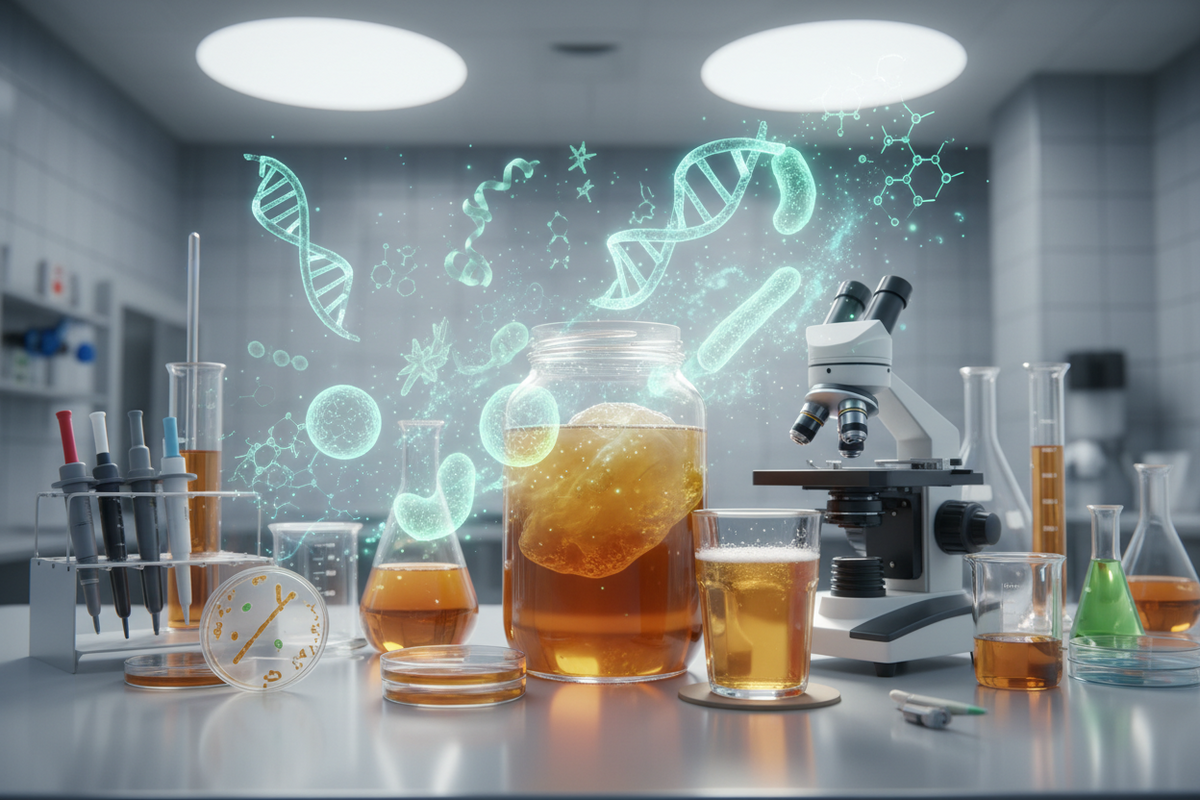
For centuries, people have fermented foods like kefir, kimchi, and sauerkraut. Depending on the food and production method, these can contain live microorganisms. However, the types of microorganisms and their properties vary greatly among individual fermented foods. Just as a SCOBY can look different. The type of tea used, room temperature, water quality, fermentation time, starter liquid, and sugar quantity all influence the "mushroom" during kombucha production. The tea mushrooms are also affectionately called SCOBYs. SCOBY stands for Symbiotic Culture of Bacteria and Yeast. So, not really a mushroom, but a culture of various bacteria and yeasts. These live in a symbiosis and together manage to produce organic acids and other fermentation products.
Are there any undesirable side effects?
As with other foods, kombucha can be tolerated differently by individuals. If you are new to kombucha, you can start with a small amount and see how it affects you.
During fermentation, a small amount of alcohol can also be produced. The alcohol content depends on the specific product and manufacturing process.
Pregnant women, nursing mothers, children, and people with individual intolerances should pay attention to the ingredients and product information of the respective kombucha and seek medical advice if unsure.
Who is kombucha suitable for?
Kombucha is suitable for anyone who likes fermented foods and is looking for a sparkling, sweet-sour alternative to classic soft drinks.
Depending on the variety, the taste ranges from classically tart to fruity and spicy. Those new to kombucha can start with a small portion and find out which variant tastes best and suits them.
How to Kombucha – brew your own tea!
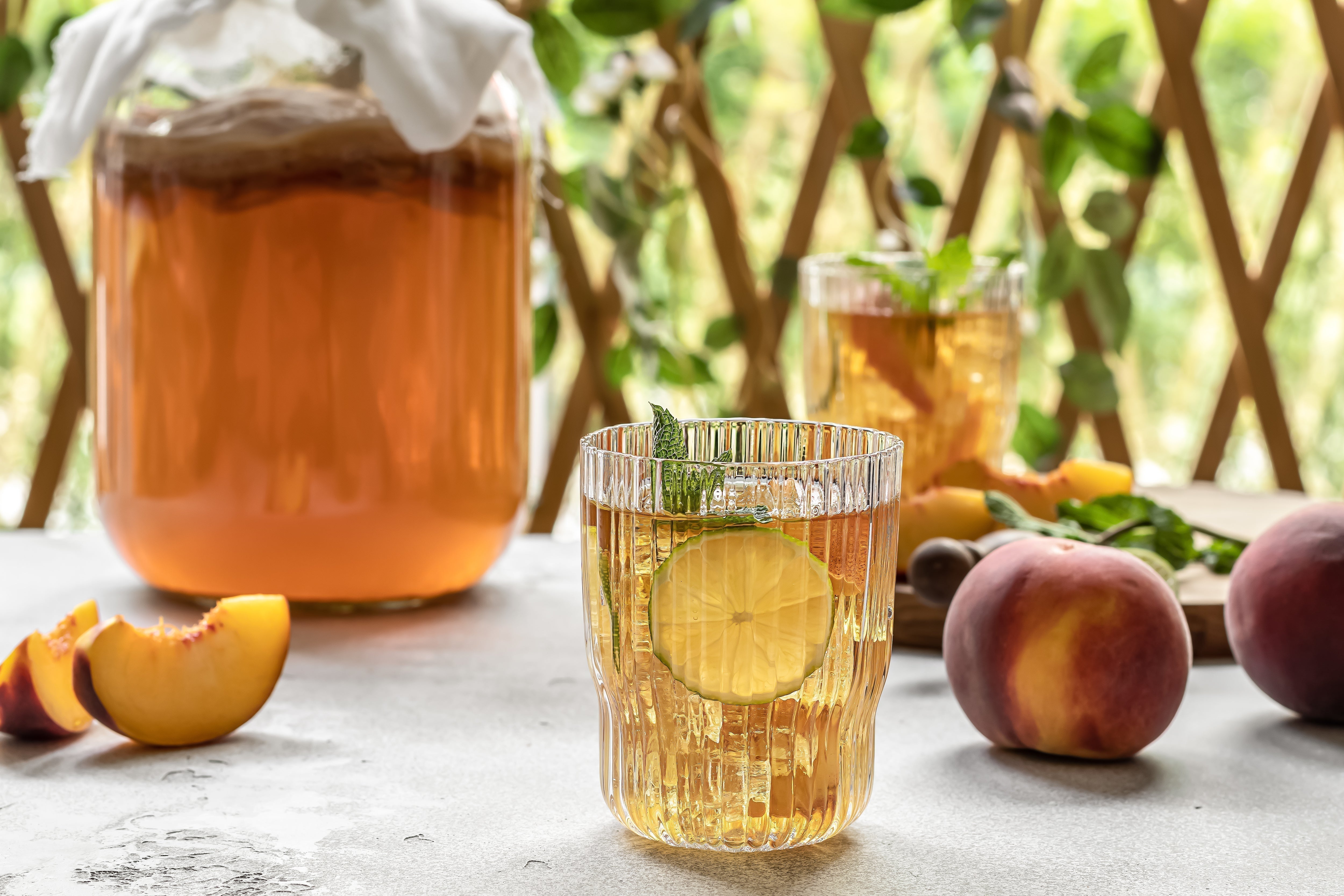
With a little patience, you can easily brew your new favorite drink at home with your own miracle mushroom, using four simple household ingredients and our Raw Original. All you need is black tea, cane sugar, water, and acidic unpasteurized kombucha. A large glass and something to cover it with, and the magic can begin. Can't wait to grow your own Scoby? Here you'll find important tips and tricks for making it at home in a fermentation vessel, in addition to kombucha recipes! Grow your own miracle mushroom!
FAQs
Why is kombucha healthy?
How healthy a kombucha is depends primarily on its specific recipe. Relevant factors include sugar content, ingredients, and processing.
Kombuchery is low in sugar and contains 6 mg of vitamin C per 100 ml. At the same time, our Raw Kombucha remains unpasteurized, so live bacterial and yeast cultures from fermentation are present in the finished drink.
Vitamin C contributes, among other things, to the normal function of the immune system and to normal energy metabolism.*
However, the mere presence of live cultures does not allow for a general conclusion about their effect on gut health.
Who is kombucha for?
Kombucha is interesting for anyone who likes fermented drinks and is looking for an alternative to classic lemonades. Depending on the product, the ingredients, processing and sugar content can vary significantly. Kombuchery is vegan and low in sugar with 2.3 g of sugar per 100 ml.
Kombucha from the supermarket vs. making it yourself – what's better?
With a little space and patience, kombucha can also be made at home. Clean utensils, suitable fermentation conditions and careful observation of the culture are particularly important. Kombuchery is fermented under controlled conditions and then not pasteurized, so that live bacterial and yeast cultures from the fermentation can remain in the drink.
Is kombucha acidic or alkaline?
Kombucha tastes sour due to the organic acids produced during fermentation. However, the perceived acidity of a food is not to be equated with the pH value of human blood or a so-called "acidification of the body."
How much sugar is in kombucha?
This actually varies depending on the production method and the type of culture. The sugar content can therefore differ significantly between different kombuchas. Currently, Kombuchery contains 2.3 g of sugar per 100 ml. This makes our kombucha low in sugar. This means our kombucha is low in sugar. The sour note remains a bit more dominant, but still super refreshing.
How many calories does kombucha have?
The calories vary depending on the ingredients and production of the kombucha. In our bottled products, the energy content is currently only 9 kcal per 100 ml. The more sugar remains in the finished drink, the higher the energy content can be. Juices added later can also increase the calorie count.
What is a Scoby?
The tea fungus or mushroom, yeast fungus is also called Scoby. English for Symbiotic Culture of Bacteria and Yeast. So actually not a fungus at all, but a culture of various bacteria and yeasts. These live in a symbiotic community and together manage to produce organic acids and other fermentation products. The Scoby is also affectionately called a miracle mushroom or simply a mushroom, kombucha mushroom. It is usually stored at room temperature in a fermentation vessel with starter liquid and activated as needed for making the kombucha beverage.
Which tea should I use for the first batch with my miracle mushroom?
For your homemade kombucha batch, you should use black tea or green tea. The tea should be free of artificial flavors and ideally organic quality. Otherwise, there's no guarantee of success for your kombucha batch. This is how the mushroom (kombucha mushroom, SCOBY, miracle mushroom) feels most comfortable.
How much alcohol is in kombucha? What is the alcohol content of kombucha?
First, it is important to understand that the duration and type of fermentation also influence the alcohol content in kombucha. The alcohol content of kombucha can vary significantly depending on the culture, recipe, temperature, oxygen supply, fermentation duration and storage. Especially with homemade kombucha, a reliable alcohol value cannot be derived from the fermentation duration alone. Without suitable measurement, the actual alcohol content cannot therefore be reliably determined. Kombuchery is produced under controlled conditions and has a maximum of 0.5% vol. Kombucha that has not been pasteurized and continues to ferment can therefore vary in alcohol content. According to German food law, a drink with a maximum of 0.5% alcohol may be described as “alcohol-free”.
Kombucha or Kefir: What are the differences?
Water kefir, milk kefir, and kombucha are fermented with different cultures and under different conditions. Fermentation time and residual sugar content depend on the recipe, initial sugar content, temperature, culture, and desired result. No general advantage of one beverage can be derived from this.
Should I use sugar with a lot of molasses or little molasses?
Raw cane sugar and whole cane sugar contain different amounts of molasses, unlike white refined sugar. This differentiates the sugar types in terms of color, taste, and mineral content, among other things. For kombucha fermentation, it is primarily crucial that the sugar used can be well metabolized by the microorganisms of the respective culture.
What basics do I need to make my own kombucha?
- Starter culture
- Kombucha Scoby
- Tea/Teas
- Cotton cloth as a cover
- Sealing clamp (rubber/band)
- Filtered water
- Sugar
- Glass fermentation vessel



Share: