

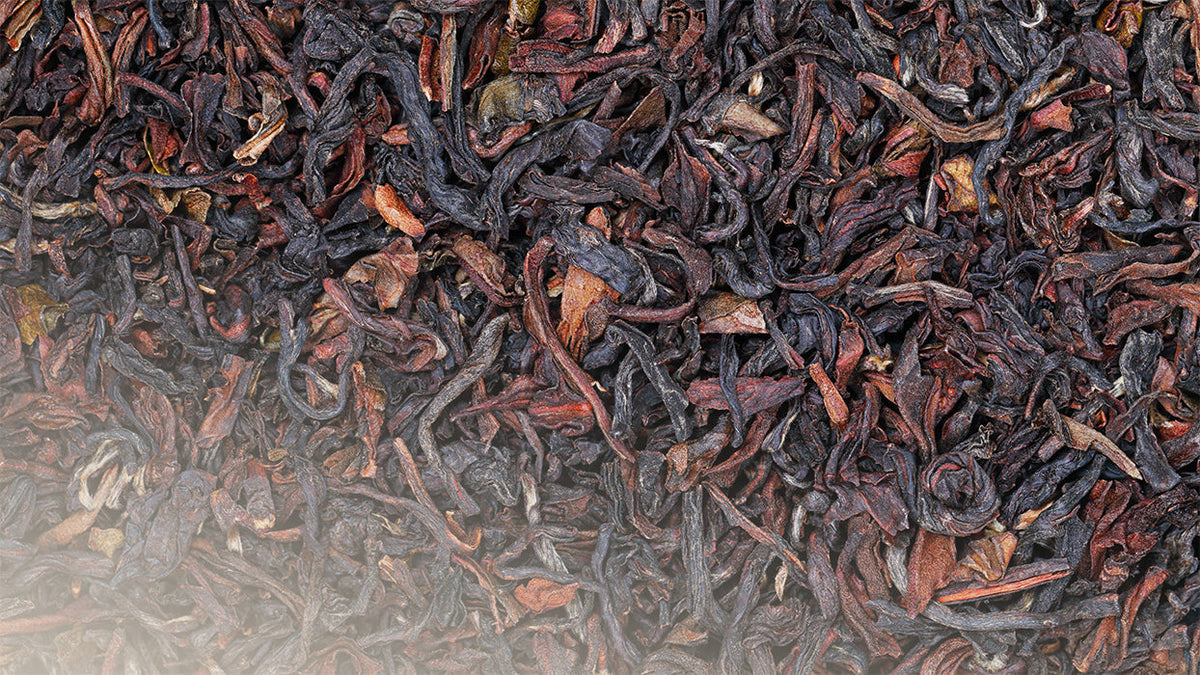

Which tea can you use for fermentation?
Successful kombucha and high-quality tea go hand in hand. But which tea is best suited if you want to ferment kombucha yourself? With a few simple basic rules, you will find a suitable type of tea for your starter. This will be followed by an interview with the tea experts from Sensaterra about tea quality, preparation, and enjoyment.
Why do you need tea for kombucha?
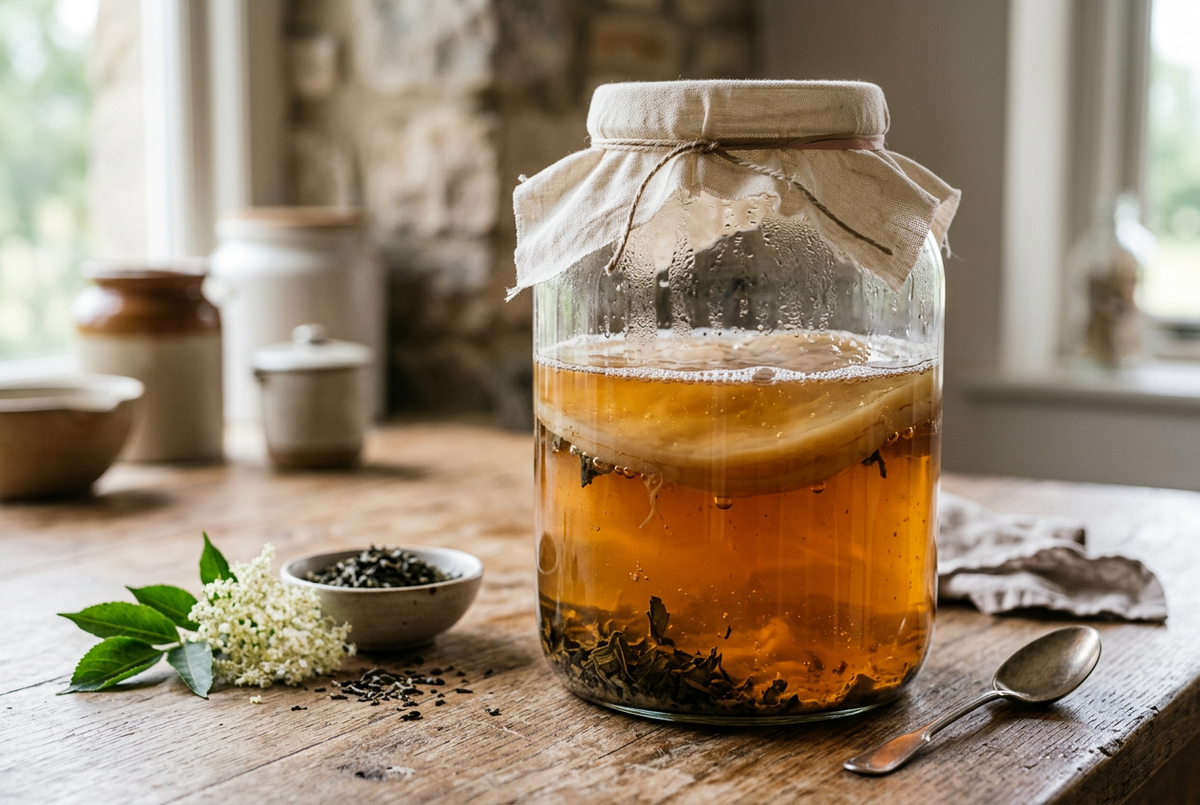
The kombucha culture consists of various yeasts and bacteria that work together in a community. For their development, they need nutrients from the sweetened tea. Classic black and green tea come from the same plant, Camellia sinensis, and provide, among other things, caffeine as well as plant components such as polyphenols and amino acids. Together with sugar and water, they form the basis for fermentation. The composition of the tea also influences the aroma of the finished kombucha.
The right tea choice for kombucha:
As a kombucha beginner, it is best to use black tea, green tea, or a mixture of both. These types of tea are well suited as a base for classic kombucha recipes.
Avoid teas with artificial flavors, added sugar, or a high proportion of strongly aromatic ingredients at the start. Such additives can influence the taste and fermentation.
You can use both loose tea and high-quality tea bags. What is more important than the form of presentation is that the tea is as natural as possible and free from unnecessary additives.
Do not use fruit tea and pure herbal teas as the sole base without further ado. If you want to try other varieties, mix them with black or green tea first and follow a proven recipe.

What water to use for brewing the tea for kombucha fermentation?
The water can also influence the taste of your kombucha. Basically, drinking water of good quality is suitable for fermentation. Whether you should filter it additionally depends on the composition of your tap water and the filter used. Filtered water is not fundamentally necessary. If your water tastes strongly of chlorine or has a pronounced own taste, suitable filtration can help to better bring out the aroma of the tea. Make sure that the water is suitable for food.
In an interview with the tea experts from Sensaterra – The magazine for current topics on tea and coffee
What makes a really good tea?
The nice thing is that everyone can perceive something different as "good". That is why it is difficult to make a generally valid statement here. I would first recommend not consuming tea with artificial flavorings or added sugar. The great thing about tea is that you can enjoy the plant ingredients and aromas in the most diverse combinations. If you let yourself be carried away by what nature has to offer, you will be surprised. What can make a big difference in taste is the method of preparation of the respective tea. It is very important to pay attention to the water temperature and steeping time. Water that is too hot or a steeping time that is too long can highlight unwanted bitter substances in some teas and thus cover the fine aromas.
What is the difference between black and green tea?
Black and green tea come from the same tea plant. The main difference lies in the processing after picking. In green tea, the oxidation of the leaves is largely prevented through suitable processing steps. Black tea, on the other hand, is deliberately oxidized, which changes the color and aroma. That is why both types of tea can taste very different, although they come from the same plant species. The diverse processing steps enable a wide range of aromas.
What health benefits does regular tea consumption offer?
This depends, among other things, on which type of tea is drunk and how it is prepared. Unsweetened tea contributes to fluid intake. Some teas also contain plant ingredients such as polyphenols. What effects this has on humans cannot be stated generally for all types of tea. The same applies to tea: Enjoy it according to your personal preferences and pay attention to ingredients that you may want to avoid.
Is the theanine in tea more tolerable than the caffeine in coffee?
Theanine is chemically the same as caffeine. The effect can feel different depending on the drink and preparation, because the caffeine content and other ingredients play a role. Tea therefore does not fundamentally make you slower or keep you awake longer than coffee. If you react sensitively to caffeine, it is worth paying attention to the quantity and timing of consumption.
You have several articles about kombucha on your blog. What makes a good kombucha for you?
Since we are not kombucha specialists, the credibility of our partner is important to us first. We are convinced that in conversation with our partners, it quickly becomes clear whether it is industrial products or high-quality, unpasteurized products.
Who is behind Sensaterra and what is your mission?
Behind Sensaterra is a colorful, young team. Our CEOs Maxence Béguin and Camille Rodriguez are both French. The team also includes Germans and Italians, as we want to launch our e-commerce in these three countries at the same time. Our mission is to build a platform for high-quality hot drinks. That means: We want to draw attention back more strongly to small local businesses, retailers, and roasters and give them a modern way to present their products via our website. We want to convey authentic information and show how much work and care can be behind a cup of tea, chocolate, or coffee.
Where do you source your tea? Do you pay attention to fair trade?
We have no production of our own and thus no products of our own. The teas we offer on our platform come from small suppliers from France, Italy, or Germany. Everyone has their own specialties and production methods. It is important to us that our partners share similar values. We place great importance on transparency, fair trade, and sustainability.

Thank you to Eleana from Sensaterra for the interview!
You can find more exciting articles from Eleana on topics around tea and coffee here.
The most important things about the tea choice for kombucha
- Black and green tea are proven bases for classic kombucha.
- Both types of tea come from Camellia sinensis and differ mainly in their processing.
- Loose tea leaves are not absolutely necessary – suitable tea in a bag can also be used.
- Water of drinking water quality is basically sufficient; additional filtration is not always necessary.
- You should not use fruit tea and herbal tea as the sole base for kombucha fermentation without a suitable recipe.
Frequently asked questions about tea for kombucha
Which tea is best suited for kombucha?
Black and green tea are good starting points for classic kombucha recipes. Both provide plant ingredients that, together with sugar and water, form the basis of fermentation.
Can I start kombucha with only green tea?
Yes, many kombucha recipes use exclusively green tea. Use as natural a tea as possible and follow a proven recipe.
Can I use fruit tea or herbal tea for kombucha?
For classic kombucha cultures, black or green tea is the proven base. Fruit teas and herbal teas can ferment differently depending on their composition and should not serve as a complete replacement without a suitable recipe.
Does the water for kombucha have to be filtered?
No. Water of drinking water quality is basically suitable. Filtration can make sense if the tap water has a strong own taste or if certain substances are to be reduced.





Share:
2 comments
Ich nehme schon länger Hibiskustee.als Grundlage und hat immer gut funktioniert. ( auch wegen der schönen Farbe und dem leicht fruchtigen Aroma) . Ist das denn so ok oder sind die Wirkstoffe dann reduziert? Lg Ksthrin
Hallo, ik heb al een aantal keren een kombucha gemaakt van zwarte thee bio, normaal kan ik nooit zwarte thee drinken want van de theïne krijg ik hoofdpijn. Ik had gehoopt dat door het fermenteren ik de kombucha wel kan verdragen maar het blijkt niet zo te zijn. Is er ook theïne vrije waarmee ik kombucha kan maken?