
Login
Editorial Note: This article deals with general scientific findings on kombucha and not with Kombuchery products. Scientific findings and study results are not automatically transferable to individual foods or products. The article does not replace medical or nutritional advice and is not to be understood as a health-related statement about specific foods or products.

The content is based on scientific literature, publicly available sources, and the author's assessment, and does not claim to be exhaustive. New studies may confirm, supplement, restrict, or refute existing findings. Scientific publications should therefore always be considered in the overall context of the available evidence.

Studies generally refer to the specific conditions, ingredients, microorganisms, dosages, manufacturing processes, and groups of people investigated. The presented results cannot therefore be readily transferred to other foods, recipes, manufacturing processes, or products.

No statements about the effects, properties, or health benefits of specific foods or products can be derived from the information presented.

Health-related claims for foods in the European Union are subject to the applicable legal requirements. The presentation of scientific research is therefore not to be equated with a permissible health-related claim about a food or product.

If you would like to delve deeper into a topic, we recommend consulting the scientific sources linked in the article and other independent specialist literature to gain as comprehensive an understanding as possible of the current state of research.

– Before you continue reading –

We don't just know everything about Kombucha ...

but also brew probably the best raw kombucha themselves. If you're thirsty, check out our shop and see for yourself!

Try Kombuchery

9 Special Characteristics of Kombucha

Not only super refreshing and tasty, but also quite special due to natural fermentation. To give you an idea of what distinguishes kombucha from classic soft drinks and why this fermented tea drink is so special...

Reason 1: Tea as a natural base

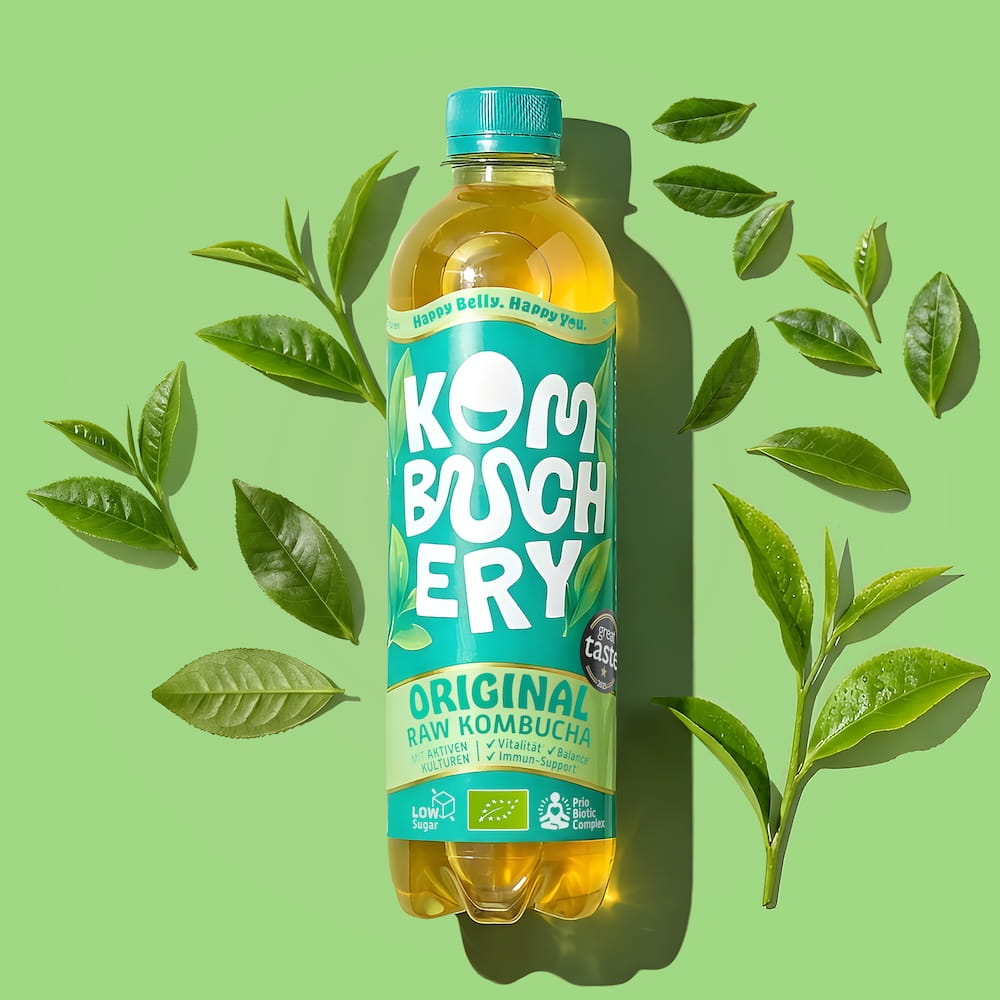
Kombucha is traditionally made from black or green tea. This means the drink brings with it the characteristic aromas and natural plant compounds of the tea used.

Reason 2: Live Cultures

In raw and unpasteurized kombucha, bacteria and yeasts from the fermentation can remain in the finished drink.

Reason 3: Natural Fermentation

During fermentation, bacteria and yeasts metabolize components of the sweetened tea. This creates the typical sweet and sour kombucha taste.

Reason 4: Organic Acids

During fermentation, various organic acids can form. Acetic acid, which contributes to the sour taste profile, is particularly characteristic.

Reason 5: Less sugar is possible

A portion of the added sugar is metabolized during fermentation. How much residual sugar remains in the finished kombucha depends heavily on the recipe and fermentation time.

Reason 6: Natural Plant Compounds from Tea

Black and green tea naturally contain polyphenols and other plant compounds. Their exact composition depends on the tea variety and processing.

Reason 7: Raw or Pasteurized

Kombucha can be processed differently after fermentation. Raw kombucha remains unpasteurized, which allows live microorganisms to remain in the finished drink.

Reason 8: Many Flavors

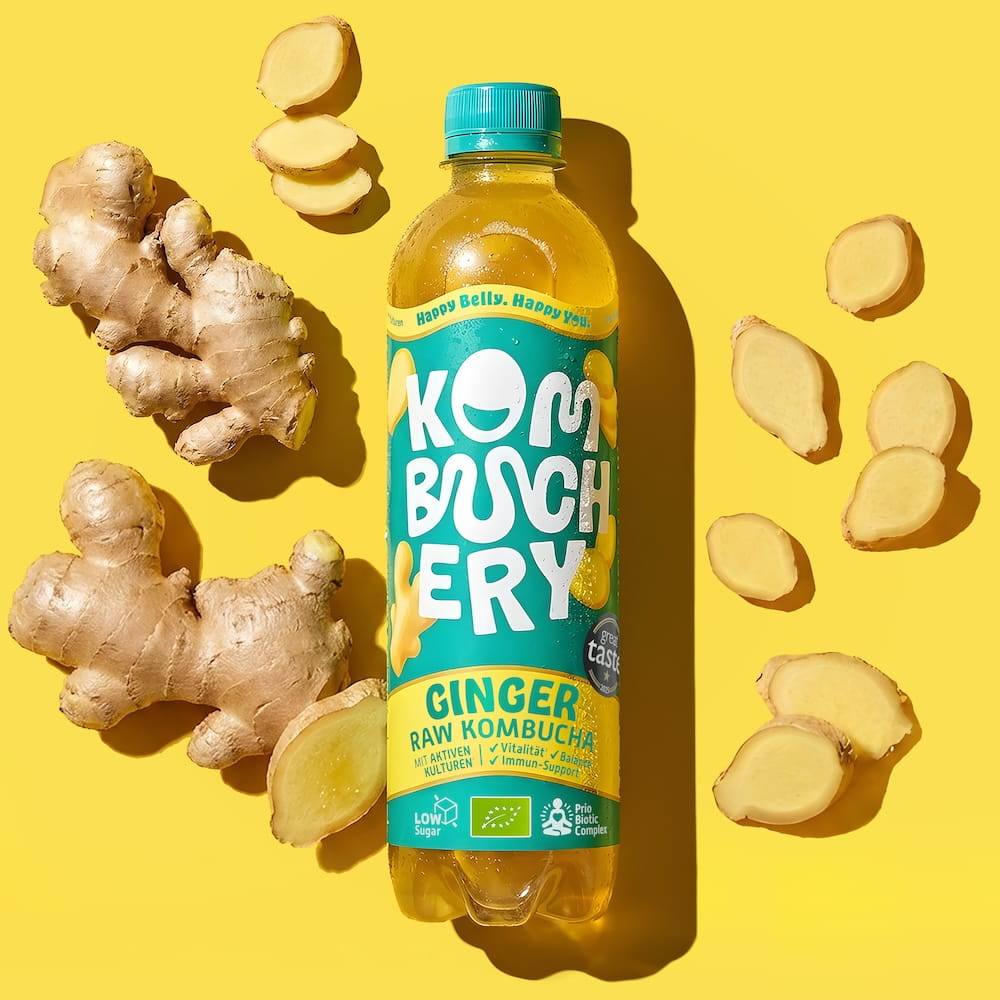
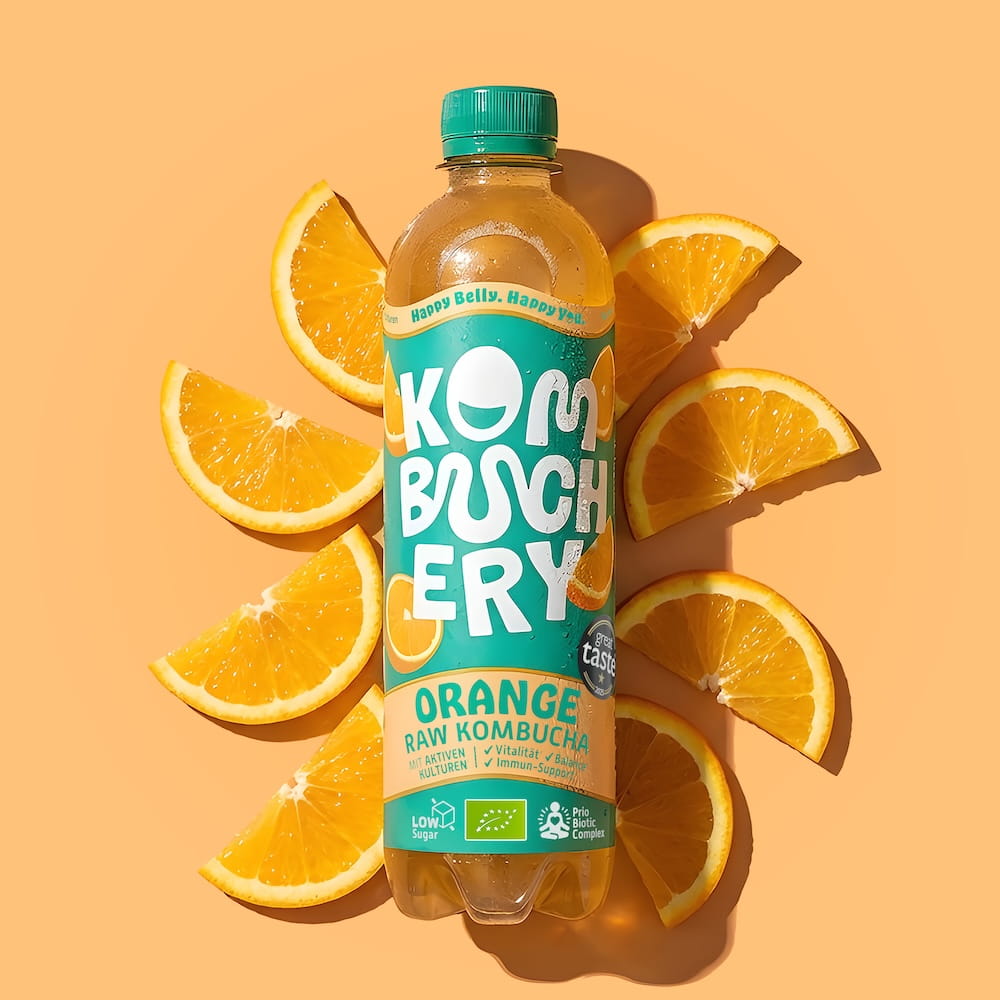
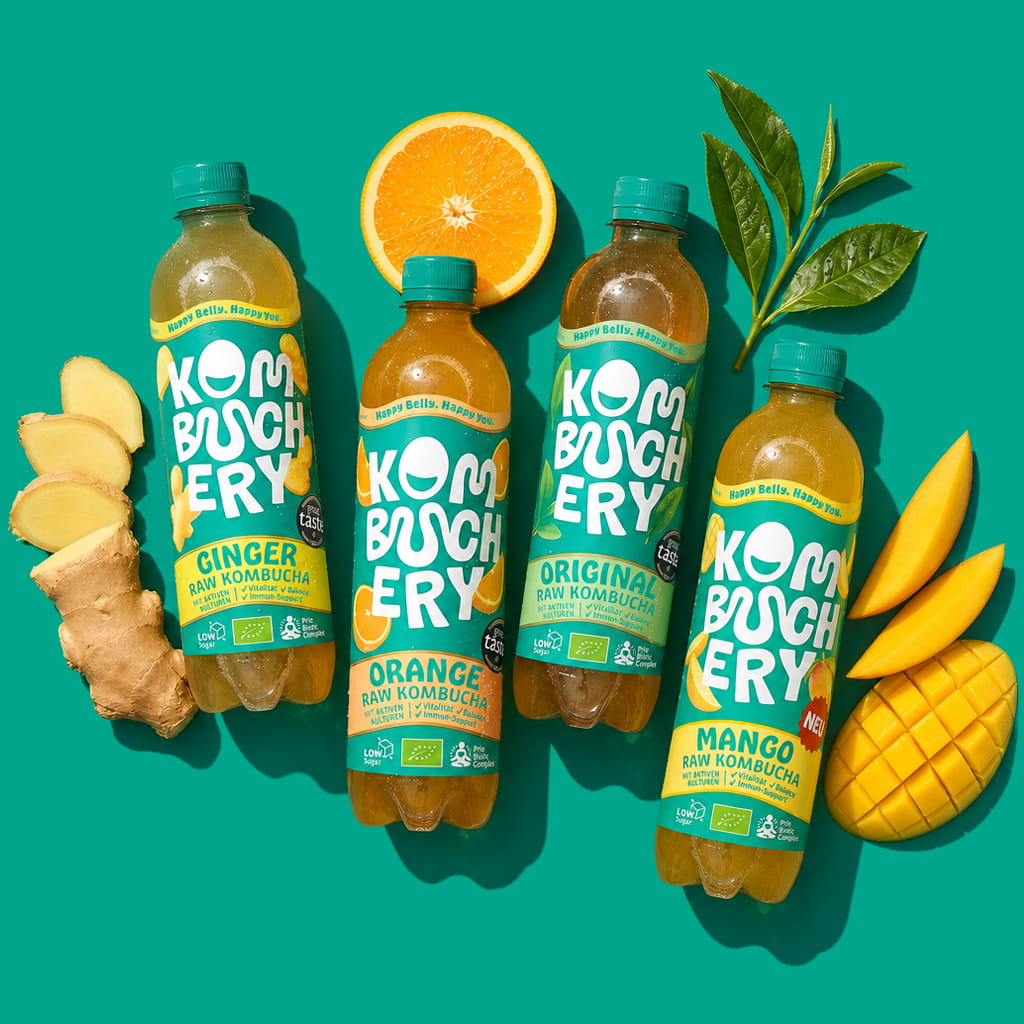
From classic green or black tea to ginger, mango, orange, herbs, and spices, kombucha can be designed to have a wide variety of flavors.

Reason 9: Unique Taste

Slightly sweet, but also a bit sour in taste, and surprisingly sparkling and refreshing. The taste is hard to describe and incomparable to conventional lemonades. Kombucha tastes simultaneously sweet, sour, tart, and sparkling, clearly setting it apart from classic sodas.
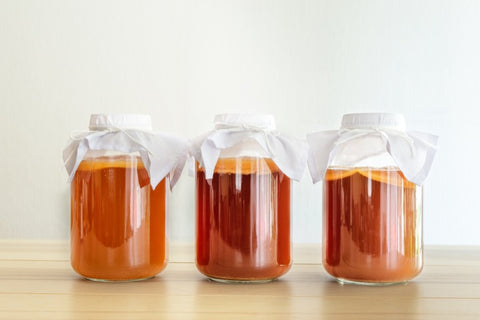
Drei grosse Glasgefaesse mit Kombucha mit Baumwolltuch abgedeckt

Recommended articles for you

More of my articles, from A, like alcohol-free kombucha cocktails, to Z, like lemon-ginger kombucha, can be found on our Kombuchery blog. Let's learn more about kombucha together!

View all

Mate Tee Trinkhalm Mateteegefaess

Mate Kombucha: These Are the Positive Effects of Mate Tea

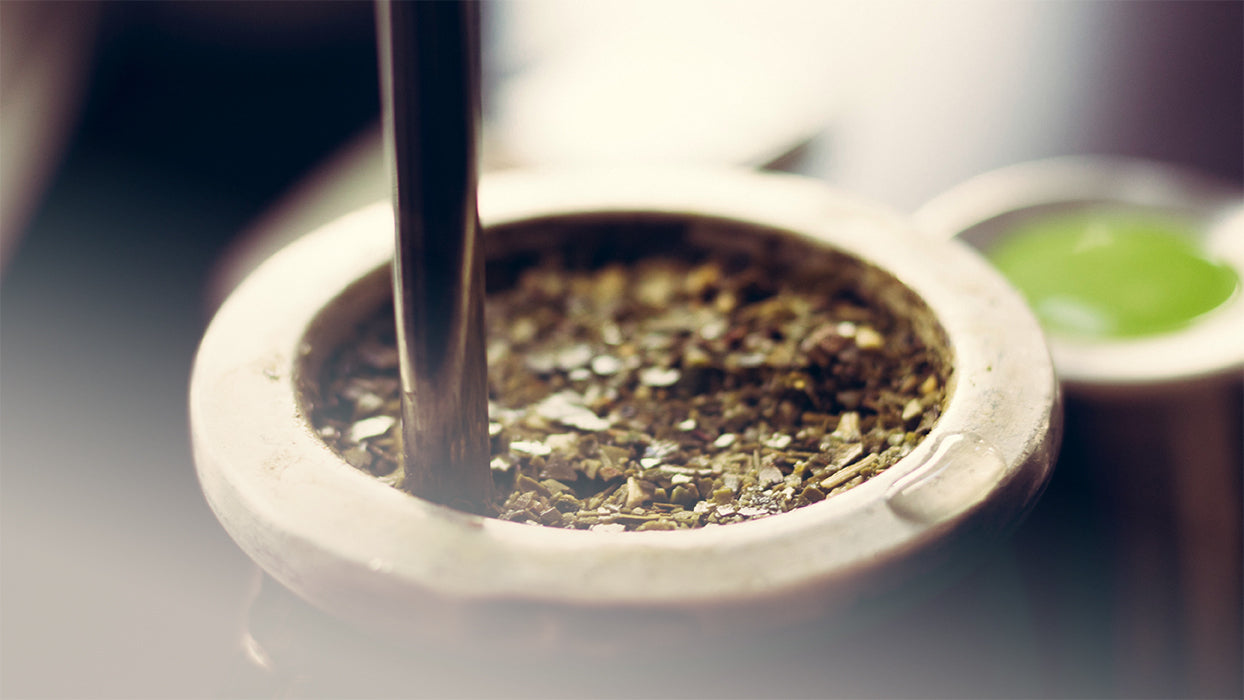
Our new Kombucha refreshes gently Our new variety Kombucha Mate combines a lightly smoky mate flavor with pleasantly sweet and sour kombucha. This tea from South America has a long tradition and is valued for its beneficial effects on the...

Read moreabout Mate Kombucha: These Are the Positive Effects of Mate Tea

Schwangere Frau im Anschnitt grosser Bauch Wiese Abendsonne

How suitable is kombucha for pregnant women and children? All answers regarding alcohol content!

Who should drink Kombucha? We'll briefly explain how much alcohol is in kombucha and how it's produced. Who should be more careful when consuming the fermented tea drink? Here you'll find all the important information. How is alcohol produced in...

Read moreabout How suitable is kombucha for pregnant women and children? All answers regarding alcohol content!

Warum kann Kombucha Alkohol enthalten? Alle Fragen zum Alkoholgehalt im Überblick

Why can Kombucha contain alcohol? – All your unanswered questions on the topic at a glance!

How is alcohol formed in kombucha? Is there kombucha without alcohol? Can pregnant women drink kombucha? Can I make alcohol-free kombucha? All your questions about kombucha and alcohol answered here!

Read moreabout Why can Kombucha contain alcohol? – All your unanswered questions on the topic at a glance!

10 Fakten zu Kombucha kaufen oder selber brauen Inhaltsstoffe

Fermented Tea Drink – 10 Interesting Kombucha Facts

What else you can learn about Kombucha 1. Kombucha Shelf Life Genuine unpasteurized kombucha has a shelf life of about 3 to 9 months. After bottling, the complete fermentation process does not stop immediately. The tea drink should therefore be...

Read moreabout Fermented Tea Drink – 10 Interesting Kombucha Facts

Wer kann mehr? Der Vergleich: Kombucha, Wasserkefir & funktionale Limonaden

Who can do more? The comparison: kombucha, water kefir & functional lemonades

In recent years, the beverage market has changed significantly. In addition to classic soft drinks, an increasing number of fermented beverages and so-called functional lemonades are available in supermarkets today. Kombucha, water kefir, and modern lemonades with added dietary fibers...

Read moreabout Who can do more? The comparison: kombucha, water kefir & functional lemonades

Kombucha Guide Berlin: Die 10 besten Cafés & Restaurants in 5 Bezirken

Kombucha Guide Berlin: The 10 Best Cafes & Restaurants in 5 Districts

Urban Wellness in Berlin: 5 Neighborhoods Where You'll Find Really Good Kombucha Berlin is one of Europe's most exciting cities when it comes to modern food and drink culture. Kombucha is no longer a niche product here, but part of...

Read moreabout Kombucha Guide Berlin: The 10 Best Cafes & Restaurants in 5 Districts

Kombucha und seine Wirkung: Wissenschaftliche Studien zu Inhaltsstoffen, Fermentation und Gesundheit

Kombucha and Its Effects: Scientific Studies on Ingredients, Fermentation, and Health

Kombucha is one of the most intensively studied fermented beverages in recent years. Modern microbiological, nutritional, and clinical studies show that the beverage has an exceptionally complex biochemical composition. During fermentation, numerous bioactive compounds are formed, including organic acids, polyphenols,...

Read moreabout Kombucha and Its Effects: Scientific Studies on Ingredients, Fermentation, and Health

🌍 World Kombucha Day am 21. Februar: Geschichte, Fakten & Tipps zum Feiern

🌍 World Kombucha Day on February 21: History, Facts & Tips for Celebrating

Celebrate the fizzy history of Kombucha Every year on February 21st, kombucha fans worldwide celebrate World Kombucha Day. But why exactly is there such a day? It's simple: it's a tribute to a drink that has delighted, inspired, and refreshed...

Read moreabout 🌍 World Kombucha Day on February 21: History, Facts & Tips for Celebrating

Die besten Nahrungsergänzungsmittel: Gesundheit gezielt unterstützen und Risiken beachten

The Best Supplements: Targeted Health Support and Risk Awareness

Dietary Supplements: When Dietary Supplements Can Be Beneficial In today's stressful world, many people don't always manage to eat an optimally healthy diet every day. Shift work, long days in the office, little time for fresh cooking, or simply a...

Read moreabout The Best Supplements: Targeted Health Support and Risk Awareness

Nouvelle formule avec de la vitamine C issue de l'acérola : *La vitamine C contribue au fonctionnement normal du système immunitaire, à un métabolisme énergétique normal et à la protection des cellules contre le stress oxydatif.
  • La vitamine C contribue au fonctionnement normal du système immunitaire.
  • La vitamine C contribue à des fonctions psychologiques normales.
  • La vitamine C contribue à un métabolisme énergétique normal.
  • La vitamine C contribue à réduire la fatigue.
  • La vitamine C contribue au fonctionnement normal du système nerveux.
  • La vitamine C contribue à protéger les cellules contre le stress oxydatif.
  • La vitamine C contribue à la régénération de la forme réduite de la vitamine E.
  • La vitamine C contribue à la formation normale de collagène pour assurer la fonction normale de la peau.
  • La vitamine C contribue à la formation normale de collagène pour assurer la fonction normale des vaisseaux sanguins.
  • La vitamine C contribue à la formation normale de collagène pour assurer la fonction normale des os, des cartilages, des dents et des gencives.
  • La vitamine C augmente l'absorption du fer.